A land survey does not legally expire. However, lenders, title companies, and buyers may reject it if it no longer reflects current property conditions. In most Philadelphia real estate transactions, surveys completed within the past 6 to 12 months are more likely to be accepted.
Because of that, an older survey can delay closing or require a new one, especially in a city where properties often change. In many cases, buyers end up needing to order a new one anyway, so it makes sense to order a land survey early and avoid last-minute issues.
Does a Land Survey Expire or Become Outdated?
A land survey does not have an official expiration date in Pennsylvania. However, it can become outdated if property conditions change or if lenders and title companies require a more recent version for review.
In Philadelphia, properties are frequently updated. Row homes get additions, fences are moved, and shared boundaries can shift over time.
A survey reflects the property at the time it was created. If the property changes, the survey may no longer match what exists today. When that happens, it is treated as outdated, even if the document looks complete.
How Long Is a Land Survey Considered Valid?
A land survey remains valid as long as the property has not changed and the information is still accurate. In practice, most lenders and title companies prefer surveys completed within the last year.
There is no statewide expiration rule. Still, real estate transactions follow lender and title company standards.
Because many properties are closely spaced and older, even small changes can affect boundaries or access. That is why more recent surveys are often required.
What Makes a Land Survey Outdated?
A land survey becomes outdated when it no longer reflects current property conditions, even if the boundary lines remain technically correct.
In Philadelphia, common causes include:
- New fences between row homes
- Home additions, decks, or rear extensions
- Utility updates or underground work
- Shared driveway or alley changes
- Subdivision or lot adjustments
Even minor updates can impact property lines or access rights, especially in dense neighborhoods.
What Are Red Flags in a Land Survey?
Red flags include missing surveyor credentials, unclear dates, incomplete measurements, and lack of easement details. These issues can lead to rejection during lender or title review.
Watch for:
- No licensed surveyor seal or signature
- Missing or unclear survey date
- Incomplete boundary measurements
- No notes on easements or shared access
- Poor-quality or unclear drawings
In Philadelphia, shared walls and tight lot lines make accuracy even more important.
How Do You Verify If a Survey Is Still Valid?
To verify a survey, review the document, compare it to the current property, and confirm acceptance with your lender and title company. If there is any doubt, a new survey is often required.
Steps to follow:
1. Review the document
- Check the survey date
- Confirm the surveyor’s license and seal
- Verify the property details
2. Compare with the property
- Walk the site if possible
- Look for changes like new structures or fencing
3. Confirm with key parties
- Ask your lender if they will accept it
- Verify with the title company
If any party is unsure, that usually means a new survey is needed.
What Does a Valid Land Survey Need to Include?
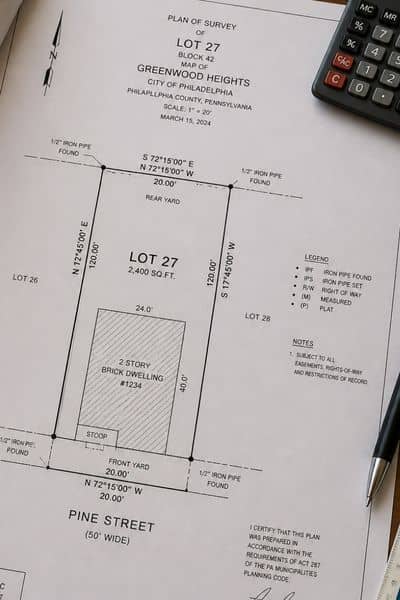
A valid land survey must include a licensed surveyor’s seal, a clear date, accurate boundary measurements, and details about easements and encroachments. It must also reflect current site conditions.
A complete survey should include:
- Licensed surveyor’s seal and signature
- Clearly marked survey date
- Accurate boundary lines and measurements
- Notes on easements, access, and shared use areas
- Identification of encroachments
- A drawing that reflects current conditions
For commercial properties, lenders often require an ALTA Land Title Survey based on standards from the American Land Title Association and the National Society of Professional Surveyors, which define national requirements for survey accuracy and reporting.
Why an Outdated Survey Can Delay Your Closing
An outdated survey is a common reason for delays in real estate transactions.
If a survey is rejected:
- A new survey may need to be ordered
- Fieldwork must be scheduled
- The document must go through review again
This can delay closing depending on surveyor availability in the Philadelphia area.
Outdated surveys also increase risk. If the survey does not match current conditions, buyers may face boundary disputes, encroachments, or title issues after closing.
Quick Reference: When a Survey May Not Be Accepted
| Issue | Why It Matters |
| Older survey | May not meet lender or title requirements |
| New structures | May create unrecorded encroachments |
| Missing seal/signature | May fail legal or lender review |
| Outdated easements | May affect shared access or utilities |
| Visible property changes | May invalidate accuracy |
What Should Buyers Do Before Closing?
Buyers should request the survey early, review it carefully, and confirm acceptance with their lender and title company. If there is any doubt, ordering a new survey helps avoid delays and protects the transaction.
Best steps:
- Request a copy of the survey early
- Review it for accuracy and completeness
- Confirm acceptance with your lender and title company
- Order a new survey if needed
In Philadelphia, where properties are often close together, taking this step early is especially important.
Final Takeaway
A land survey may not expire, but it can quickly become outdated.
Buyers who verify early reduce risk, avoid delays, and move through closing with more confidence. If there is any uncertainty, ordering a new survey is a practical step that protects both the property and the investment.
Frequently Asked Questions
Does a land survey expire?
No, a land survey does not expire under Pennsylvania law. However, it can become outdated and may not be accepted if it does not reflect current property conditions.
How old can a land survey be for a mortgage?
Most lenders prefer surveys completed within the past 6 to 12 months, although requirements may vary.
Can I use a survey from a previous owner?
Yes, but it must still reflect current conditions and be accepted by your lender and title company.
What happens if a survey is outdated?
An outdated survey can delay closing, require a new survey, and increase the risk of boundary or title issues.
Do I need a new survey before buying property?
If the existing survey is old or does not match the property, ordering a new survey is usually the safest option.