
If you own property, it is easy to assume your lot is flat enough to build on. At first glance, most properties look level. However, small changes in elevation often hide in plain sight. These changes may seem minor, yet they can affect your entire project. That is where LiDAR mapping becomes valuable. Instead of guessing, you can see how your property is mapped, which makes it much easier to understand how your land really sits before design work begins. Because of this, you make better decisions early and avoid costly surprises later.
Why Elevation Matters More Than It Seems
Philadelphia has many rowhomes, narrow lots, and closely spaced properties. Because of this, even a slight difference in ground height can affect how a project comes together. For example, a backyard that drops just a few inches may change how you design your foundation or place your entry points.
At the same time, neighboring properties often sit at slightly different heights. So, your design must fit not only your lot but also what surrounds it. As a result, elevation becomes more important than most property owners expect.
How LiDAR Mapping Gives a Clearer View of Your Property

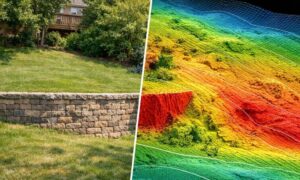
Unlike a simple walk-through, LiDAR mapping uses precise data to capture the surface of your land. It measures thousands of points across the property. Then, it builds a detailed model that shows how the ground actually changes.
Because of this, you can clearly see slopes, dips, and transitions across your lot. Over time, this makes it easier to understand your property’s elevation better and see how those small changes can affect your plans. Instead of relying on what looks “flat,” you work with accurate information.
Why Visual Checks Can Lead to Design Problems
Many property owners rely on what they can see. That makes sense at first. However, the human eye cannot easily detect small elevation shifts. A yard may appear even, yet it may slope enough to affect construction.
Because of this, design plans often start with incorrect assumptions. Later, when construction begins, those assumptions cause issues. For example, a foundation may need adjustment, or steps may need to be added where none were planned.
As a result, projects face delays, added costs, and frustration. However, with LiDAR mapping, you avoid these problems before they start.
How LiDAR Mapping Supports Better Design Decisions
When you use LiDAR mapping early, you gain a clear understanding of your property. Because of that, your design can match the land from the beginning.
For instance, you can see whether your lot is truly level. If it is not, you can adjust your plans right away. In addition, you can determine the right height for your foundation. That way, your structure fits naturally with the ground.
At the same time, you can spot tight areas where space may be limited. This matters a lot in Philadelphia, where every inch counts. So, instead of redesigning later, you plan correctly from the start.
A Common Scenario in Philadelphia Properties
Imagine a homeowner planning a rear extension. At first, the yard looks flat. So, the design moves forward without concern. However, once LiDAR mapping is used, a slight drop toward the rear becomes clear.
Because of this, the original design no longer fits as planned. The foundation would sit unevenly, and the layout would need changes. If this discovery happens late, it leads to delays and extra cost.
However, when the issue appears early, the design adjusts quickly. As a result, the project stays on track and avoids unnecessary problems.
When LiDAR Mapping Makes the Most Sense
In many cases, property owners benefit from using LiDAR mapping before design work begins. This is especially true when working with tight lots or planning major changes.
For example, if you plan to build an addition, it helps to know how the ground will affect your layout. Also, if you are buying property, it is important to understand the land before making a decision.
In addition, developers often rely on early data to avoid design revisions. Because of this, LiDAR mapping becomes a smart step in the planning process.
Why This Approach Works Well in Philadelphia
Philadelphia’s dense layout makes planning more complex. Properties sit close together, and space is limited. Because of this, even small elevation changes can affect how a project fits within its surroundings.
At the same time, there is little room for error. Once construction starts, changes become more difficult and expensive. Therefore, having accurate data before design begins is very important.
With LiDAR mapping, you gain that accuracy early. As a result, your project moves forward with fewer surprises and better results.
Plan with Confidence Before You Build
Starting a project without clear information often leads to problems. However, when you understand your land from the beginning, everything becomes easier.
With LiDAR mapping, you see what your property truly looks like. Because of this, you can design with confidence and avoid costly changes.
In the end, better planning leads to smoother projects. When you take the time to understand your land first, you set yourself up for success.