Philadelphia recently made headlines after city officials revoked contractor licenses and issued stop-work orders on several projects. Inspectors stepped in. Crews paused work. Owners faced delays. While most news stories focus on the contractors involved, there is another side to this shift. The city is sending a clear message: rules matter, documentation matters, and field accuracy matters. Because of that, every construction survey now carries more weight than ever before.
If you are building in Philadelphia, this change affects you directly.
What the Crackdown Really Means for Active Job Sites
First, the city has increased oversight. Inspectors now review sites more closely. They compare approved plans to what crews build in the field. They check setbacks, elevations, and boundary limits. When something does not match, they issue violations quickly.
As a result, there is less room for field adjustments or “close enough” measurements. Even small layout differences can trigger questions.
For property owners and developers, this means higher risk. A mistake that once caused a minor correction could now lead to a stop-work order. And when work stops, costs rise fast.
That is where the construction survey becomes critical.
A Construction Survey Is No Longer Just a Layout Tool

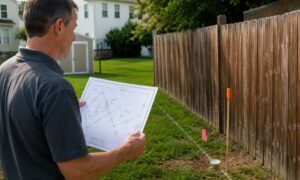
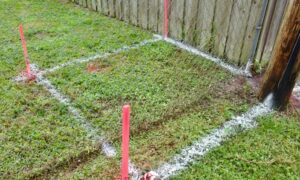
Many people see a construction survey as simple staking. Surveyors mark lines. Crews follow them. The project moves forward.
However, in today’s enforcement climate, a construction survey does much more.
It creates a record.
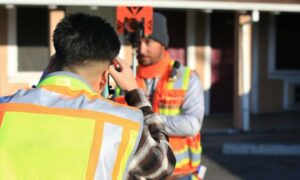
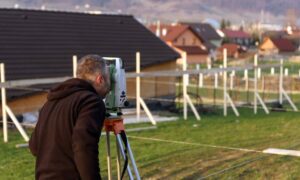
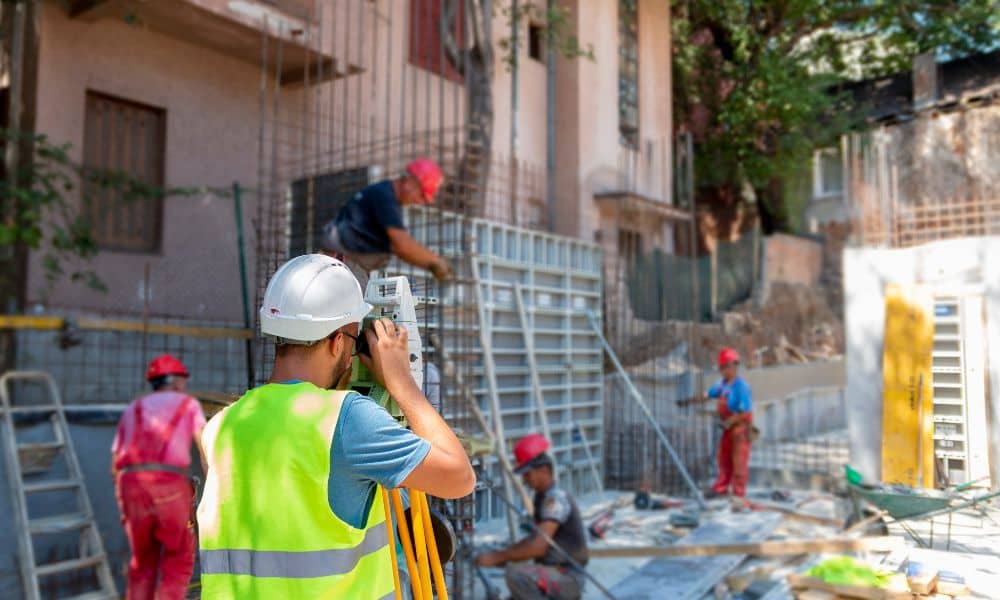
A licensed land surveyor confirms property lines. They verify setbacks. They check elevation benchmarks. They tie measurements to approved plans. Most importantly, they stamp and document their work.
Because of this documentation, your project gains a layer of protection. If inspectors question something, you have proof. If a neighbor raises a concern, you have measured data. If lenders review compliance, you can show verified field conditions.
In other words, the survey does not just guide the build. It protects the build.
Why Enforcement Raises Financial Risk
Philadelphia’s tighter inspections affect more than construction schedules. They also affect money.
First, stop-work orders delay labor and equipment. Crews sit idle. Materials wait. Project timelines shift. Even a short delay can cost thousands of dollars.
Second, lenders and investors pay attention to compliance issues. If inspectors issue violations, funding draws can slow down. Banks want to see clear documentation before releasing the next round of money.
Third, insurance carriers review risk exposure. When a project faces regulatory trouble, insurers may ask for records. A clear construction survey helps reduce uncertainty.
Therefore, developers who invest in precise survey work often avoid bigger financial headaches later.
Inches Matter in Philadelphia
Philadelphia’s tight urban spaces leave little room for error. Buildings sit close together. Setbacks remain strict. Many sites share party walls. In these areas, even inches matter.
For example, if a foundation crosses a property line, the owner may face legal action. If a structure violates a setback rule, the city may require changes. If finished floor elevations do not match approved plans, inspectors may delay approval.
Because of these risks, survey verification must happen before concrete pours and structural framing. Once crews build above ground, corrections become expensive.
That is why proactive teams schedule construction survey checks at key milestones instead of waiting for inspection day.
Where Projects Often Run Into Trouble
Under stronger enforcement, certain weak points show up quickly.
Some projects rely on outdated control points. Others fail to re-check elevations after grading. In some cases, teams skip mid-project verification because schedules feel tight.
However, when inspectors compare site conditions to permit drawings, gaps appear.
Most problems do not start with bad intent. They start with assumptions. Someone assumes the boundary remains clear. Someone assumes the benchmark did not shift. Someone assumes the layout stayed accurate.
Instead of assuming, strong projects verify.
Smart Builders Are Adjusting Their Approach
Forward-thinking developers in Philadelphia have already changed how they manage risk.
First, they involve a construction surveyor early and keep them engaged throughout the project. They do not treat survey work as a one-time task.
Next, they schedule verification surveys before major inspections. This step gives teams a chance to correct small issues before city officials step in.
In addition, they maintain organized survey documentation. Clear records help answer questions quickly. When inspectors ask for proof, the team provides it without delay.
As a result, projects move forward with fewer surprises.
Why Licensed Expertise Matters More Now
In times of increased enforcement, experience matters. A licensed land surveyor understands local codes and city expectations. They know how Philadelphia inspectors review setbacks and elevations. They understand how tight urban sites increase exposure.
Moreover, licensed professionals carry accountability. Their stamp shows that a trained expert verified the measurements. That accountability builds trust with lenders, engineers, and regulators.
Choosing the right construction survey team therefore becomes a strategic decision, not just a technical one.
Construction Surveys as Compliance Safeguards
The recent contractor crackdown does not signal panic. Instead, it signals higher standards.
Philadelphia wants safer projects, clearer boundaries, and accurate builds. While that raises pressure on contractors, it also highlights the value of solid survey work.
A reliable construction survey helps you:
- Confirm compliance before inspectors arrive
- Reduce the risk of stop-work orders
- Protect against boundary disputes
- Support smooth funding releases
- Maintain strong documentation
In today’s climate, that protection matters.
The Bottom Line
Philadelphia’s enforcement efforts have raised the stakes across the construction industry. Oversight has increased. Inspectors act faster. Financial risk grows when projects fall out of compliance.
Because of this shift, every construction survey carries more responsibility than before. It no longer serves only as a guide for layout. It now acts as a safeguard for your investment.
When enforcement rises, precision becomes protection. Developers and contractors who treat survey work as risk management — not just measurement — position their projects for smoother approvals and stronger outcomes.
If you plan to build, now is the time to ask one important question: Is your construction survey strong enough to stand up to scrutiny?