You requested three quotes for a property survey. One contractor says $1,500. Another quotes $2,800. A third estimate comes in at $4,200. What explains the massive gap?
You might think someone’s trying to rip you off. That’s usually not the case. Property survey cost quotes vary widely because Pennsylvania’s aging subdivisions hide complexity that most developers miss. Historical paperwork, missing markers, and conflicting deed descriptions turn straightforward jobs into detective work.
This guide walks you through the real reasons survey costs differ. Understanding these factors helps you evaluate quotes fairly and budget accurately for your project.
Older Subdivision Maps Sometimes Require Extra Research
Pennsylvania’s neighborhoods didn’t all appear overnight. Many were platted in the 1950s, 1970s, or even earlier. Those old plat maps are your surveyor’s starting point. But they often bring headaches.
Handwritten notes crowd the margins. Bearings reference landmarks that no longer exist. Some plats describe property lines using outdated terminology or measurement systems. A surveyor might find a note that says “pine tree near the northwest corner.” There are no GPS coordinates or current street names.
What Surveyors Actually Do
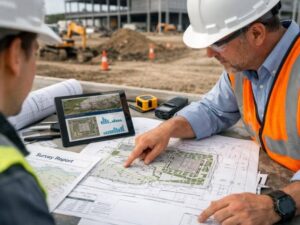
Before stepping onto your property, your surveyor digs through county archives. They hunt for original plats, amendments, and correction documents. Some records live in microfilm files. Others exist only in paper form in county basements.
This research phase costs time. The more complex the plat history, the higher the cost. A subdivision created last year? Quick to reference. A neighborhood from 1962? Expect longer research time and a higher bill.
Missing Original Markers Can Increase the Amount of Field Investigation
Every property corner should have a marker. State law once required iron pins. Not everywhere enforced this rule the same way.
Over the decades, these markers go missing.
- Erosion buries them underground
- Construction equipment destroys them
- Neighbors remove them by accident or on purpose
- Root systems shift the ground around them
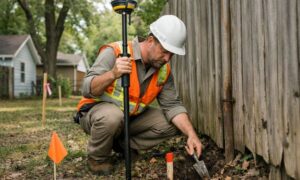
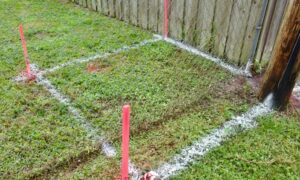
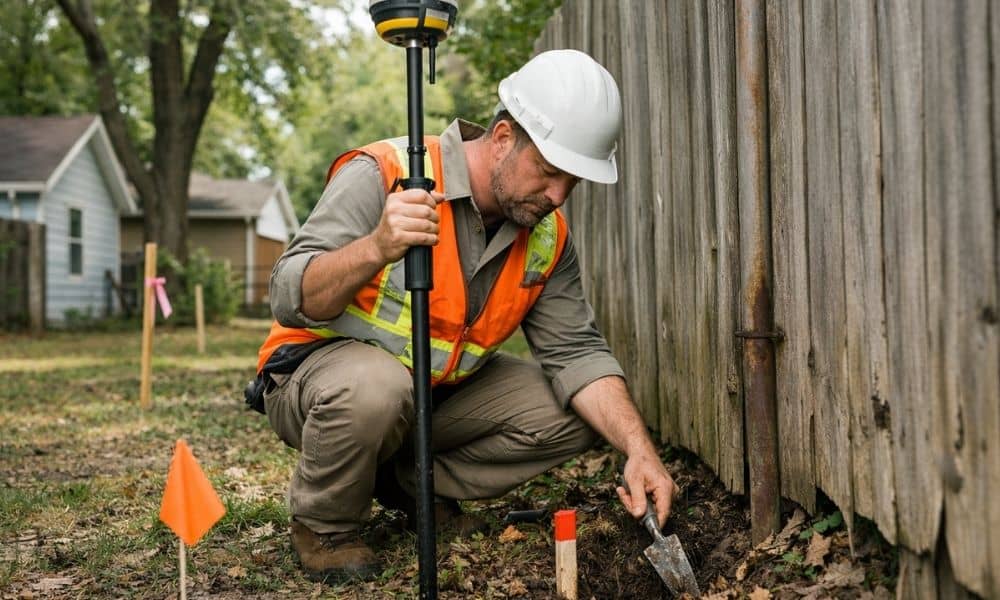
When a surveyor can’t find the original monument, they must reconstruct the corner location. This means measuring from nearby markers. Comparing measurements to old records. Sometimes checking with adjoining properties to triangulate the exact spot.
Why This Adds Cost
Reconstruction takes longer than finding an existing marker. Your surveyor might need to measure multiple directions. They compare current measurements to what the old plat says. If neighbors’ records conflict with yours, the work multiplies.
Some jobs require a full day of investigation for one corner. Other properties need corner work across multiple boundaries. Each hour of extra fieldwork translates to higher costs.
Neighboring Deeds Do Not Always Match One Another
Gaps happen. Overlaps happen. Sometimes neighboring deeds describe lines in completely different ways.
One property’s western boundary might not align with the eastern boundary of the property next door. A few feet of gap appears. Or an overlap creates a dispute nobody expected.
Your surveyor must reconcile these conflicts. They review multiple deeds. They pull old plat amendments. They examine how each property was originally subdivided. Sometimes the answer is clear: someone made a recording error decades ago. Other times, the history is genuinely murky.
How This Affects Your Quote
Simple reconciliation might add $200 to $500 to the job. Complex conflicts requiring deed analysis and historical research can add $1,000 or more. Some surveys uncover issues that demand a lawyer’s attention before the surveyor can finish.
Improvements Added Over the Years Can Complicate the Survey Process
You didn’t build your property from scratch. Owners before you added things.
- Decks and patios
- Retaining walls and terraces
- Fences and gates
- Sheds, garages, or pools
- Driveways and parking areas
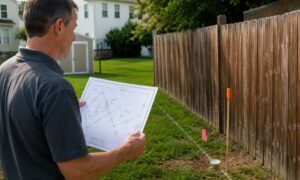
These structures may sit right on or near property lines. Your surveyor must determine if they fall within your boundaries or not. If they cross the line, that creates a legal issue affecting the survey scope.
The Documentation Challenge
Surveying improvements requires extra field measurements and documentation. If a fence sits 18 inches over a line, that’s a material fact requiring special notation on the survey. A deck built on easement land needs verification against easement documents.
Older improvements without recorded approval or permits create gray areas. Your surveyor might need to research permits from the 1980s. Or verify whether an old addition was ever formally permitted.
Access to Historical County Records Can Influence Project Complexity
Pennsylvania has 67 counties. Each maintains records differently.
Some counties digitized everything. Others maintain hybrid systems. Recent documents go online, older records stay in archives. A few rely primarily on paper and microfilm.
If your property sits in a county with robust digital systems, your surveyor accesses information in hours. If records hide in microfilm or paper storage, retrieval takes days. Some research requires a site visit to the county building.
Real-World Impact
A suburban property in Chester County might pull all necessary records in one afternoon. A rural property in Pike County with records spanning a century might require multiple county office visits. Travel time, research time, and the sheer volume of documents to review all push costs upward.
Your surveyor can’t estimate this cost upfront without knowing your county’s record systems and your property’s history.
What This Means for Your Budget
Survey costs vary because properties aren’t identical. That $1,500 quote was probably for a simple, modern subdivision where everything lines up. The $4,200 quote tackles a complex situation: old records, missing markers, conflicting deeds, and tricky improvements.
Neither quote is wrong. They reflect different scopes of work.
When you request quotes, ask each surveyor why their estimate is what it is. Answers should reference:
- The property’s age and subdivision history
- Known issues with local records
- Anticipated research time
- Expected fieldwork complexity
Surveyors who explain their estimates help you understand the real costs involved.
Why Your Quotes Are All Different
Don’t assume high survey quotes are padding. They usually reflect real complexity hidden in Pennsylvania’s old properties. When your surveyor’s quote seems high, ask what they found during initial research. The explanation will show you why the cost makes sense.
The property survey cost you end up paying matches the actual work required to do the job right.
Frequently Asked Questions
Why can two survey companies provide different property survey quotes?
Different firms may estimate varying amounts of research and field work depending on the age and complexity of the property records.
Do older subdivisions usually require more survey research?
Yes. Older subdivisions often contain outdated plats and missing monuments that require additional investigation.
Can missing property markers affect survey pricing?
Yes. Re-establishing lost or disturbed monuments can increase the amount of field work required.
Do neighboring deeds sometimes create complications?
They can. Conflicting descriptions between adjoining parcels may require surveyors to review multiple records before establishing boundaries.
Why do historical records matter during a property survey?
Historical plats, deeds, and archived documents help surveyors understand how the property was originally created and how boundaries should be interpreted today.