Airports can be confusing places. Long hallways, different floors, moving gates, and crowds make it hard to find your way. For people with mobility or vision challenges, this can be even more stressful. Because of this, airports are starting to use better tools to help travelers move safely and confidently. In Pennsylvania, Lehigh Valley International Airport has taken an important step. It now uses LiDAR-based navigation to improve accessibility inside the airport. This project shows how lidar mapping Pennsylvania is being used in new and helpful ways. It also proves that accurate mapping can improve everyday experiences, not just construction projects.
Why Accessibility Navigation Matters More Than Ever
Airports change often. Walls move, paths close, and new signs appear. However, many maps do not update fast enough. As a result, travelers may follow directions that no longer match the space around them.
At the same time, more people expect airports to be easy to use. Accessibility is no longer optional. It is part of good design and good service. People want clear routes, safe paths, and directions they can trust.
To meet these needs, airports need accurate information about their buildings. That is where LiDAR mapping becomes useful.
How LiDAR Mapping Helps Inside Buildings
LiDAR mapping uses lasers to measure spaces. Indoors, it captures exact details of hallways, doors, ramps, elevators, and open areas. Every part of the building is measured as it really exists.
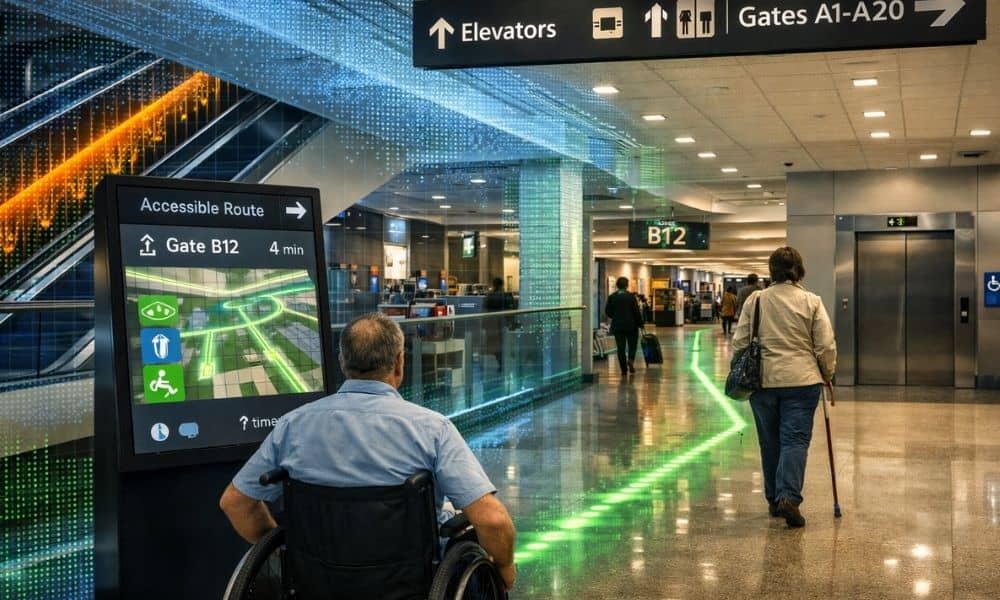
At Lehigh Valley International Airport, this data supports an accessibility navigation system. Instead of guessing which paths work best, the system uses real measurements. This allows it to guide travelers around stairs, tight spaces, or obstacles.
Because the data stays accurate, the navigation system remains reliable even when the airport layout changes.
Why Airports Are a Strong Example
Airports are some of the hardest buildings to manage. They stay open all day and night. They serve thousands of people daily. They also include many levels and secure areas.
Because of this, airports often test new technology first. If a system works in an airport, it usually works well in other large buildings too.
This project shows how lidar mapping Pennsylvania can succeed in complex places. The same ideas apply to hospitals, colleges, transit stations, and large office buildings.
How This Improves Accessibility for Travelers
Accurate navigation helps people feel independent. Travelers no longer need to guess or ask for help. Instead, they can follow clear directions from start to finish.
LiDAR-based navigation helps identify:
- Step-free routes
- Changes in floor height
- Narrow walkways
- Temporary barriers
This information helps travelers move safely and with confidence. Over time, it also reduces stress and confusion.
These benefits help everyone. Parents with strollers, travelers with bags, and older adults all benefit from clear and easy routes.
What This Means for Property Owners
Although this example comes from an airport, many other buildings face similar challenges. Large indoor spaces often rely on old drawings that no longer match reality.
With LiDAR mapping, owners gain a clear view of their buildings. They can support navigation tools, plan updates, and manage changes more easily. They also improve how people experience their spaces.
For organizations focused on accessibility, lidar mapping offers a practical solution. It delivers accurate data without disrupting daily operations.
LiDAR Mapping vs Traditional Building Plans

Traditional building plans often miss details. They may not show recent updates or small changes. Manual measurements can also include errors.
LiDAR mapping captures the building as it is today. It collects millions of points that form a detailed and accurate model.
Because of this, teams can make better decisions. Facility managers know where features are located. Designers understand how people move through space. Navigation systems work more reliably.
Instead of relying on guesses, everyone works with real information.
Accessibility Is Becoming a Long-Term Focus
Across Pennsylvania, public buildings face growing pressure to improve accessibility. Laws change. Awareness grows. Expectations increase.
LiDAR mapping helps organizations plan ahead. By understanding their spaces early, they can fix issues before they become bigger problems. This saves time and money over the long run.
Lehigh Valley International Airport shows how this approach works. By using accurate spatial data, the airport created a better experience for all travelers.
When LiDAR Mapping Makes Sense Indoors
Not every building needs LiDAR mapping. However, it makes sense when:
- The building is large or complex
- Many people use the space daily
- Layouts change often
- Accessibility is a priority
When these conditions exist, LiDAR mapping adds real value.
Looking Ahead
The work done at Lehigh Valley International Airport shows how technology can improve public spaces. LiDAR mapping is no longer limited to land surveys. It now supports navigation, accessibility, and smarter building management.
As lidar mapping Pennsylvania continues to grow, more facilities will follow this path. Airports today. Hospitals and campuses next.
Accurate data leads to better decisions. Better decisions create safer, more welcoming spaces. That is the true value of LiDAR mapping.