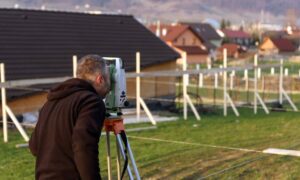

Pittsburgh is famous for its hills, bridges, and beautiful river views. But those same hills can also cause big problems when the ground starts to move. Landslides and sinkholes are nothing new here, and they often leave homeowners facing expensive repairs. Now, a new state bill is making headlines for trying to help. In early October 2025, the Pennsylvania House approved a plan to create a landslide and sinkhole insurance program. If it becomes law, it could change the way people buy, sell, and build property in the region. And it will make an ALTA survey more important than ever for anyone dealing with Pittsburgh real estate.
A Safety Net for Homeowners
The proposed program would set up a $10 million fund to help people whose homes are damaged by landslides or sinkholes. It’s the first statewide effort of its kind. Lawmakers from Allegheny County pushed for it after years of storm-related slides in neighborhoods like Mount Washington, Beechview, and Brookline.
If the bill passes the Senate, homeowners could apply for help paying for repairs. But the new insurance plan will also make lenders and buyers more cautious. Before giving loans or writing policies, they’ll want to be sure that the land underneath a house or commercial site is stable. That’s where a current ALTA survey becomes essential.
Why Pittsburgh’s Terrain Matters
Pittsburgh’s landscape is both beautiful and risky. The city was built on steep slopes with soft clay soils that shift after heavy rain. Each year, dozens of small slides damage driveways, walls, and even roads.
To manage that risk, the city created two special zoning overlays: Steep Slope (SS-O) and Landslide-Prone (LS-O). These overlays show where land is likely to move or where the grade is so steep that extra review is needed before building.
When the new insurance bill takes effect, these zones will matter even more. Buyers, lenders, and developers will look closely at them before moving forward. An ALTA survey that clearly shows slope angles, retaining walls, and drainage paths can help prove that a property is safe to build on or finance.
How the New Bill Connects to ALTA Surveys
At first, a landslide insurance law might not sound like it has much to do with land surveying. But it does.
For banks and insurance companies, an ALTA survey is one of the best ways to confirm that a property has been checked carefully. It maps out boundaries, easements, improvements, and visible features on the site. With the new law, lenders may ask for more details about elevation and drainage to reduce future risk.
Surveyors may start adding extra observations such as:
- Where water naturally flows off the land
- Signs of past soil movement
- The height and condition of retaining walls
Those small additions can make a big difference when deciding whether a property qualifies for a loan or insurance coverage.
Changing the Way Deals Get Done
Until now, most ALTA surveys focused on legal and structural details—property lines, access points, and easements. Under the new rules, they’ll also help prove that the ground itself is stable.
Here’s how it might affect a typical real-estate deal:
- Before closing: A bank might hold the loan until a survey confirms that the property isn’t inside a high-risk zone.
- During design: Developers could need topographic data early to plan safe grading and drainage.
- For insurance: Homeowners may have to show a recent ALTA survey when applying for coverage or filing a claim.
That means surveyors will work more closely with engineers and city planners. Everyone will want to be sure that the information in the survey matches what’s really happening on the ground.
What This Means for Builders and Developers
For anyone building in Pennsylvania, time and accuracy will become even more important. The city already limits how much grading can happen on slopes steeper than 25 percent. The new insurance program adds another reason to document conditions before construction begins.
Developers who order an ALTA survey early can avoid surprises later. A survey that includes slope and drainage data helps engineers design retaining walls, stormwater systems, and foundations that meet both city and lender requirements.
If the land shows warning signs—like cracks in pavement or tilted fences—those details can be shared with a geotechnical engineer before permits are filed. Fixing a design early is always cheaper than repairing a failed slope after construction.
A Closer Look at City Codes

Pittsburgh’s zoning rules already connect directly to land stability. The Steep Slope Overlay (§906.08) and Environmental Performance Standards (§915.02) describe what must be done when building on or near unstable ground.
The new state insurance bill doesn’t replace those local rules, but it strengthens them. Together, they form a double layer of protection: city codes to guide safe construction, and state insurance to help when nature still wins.
When survey data clearly identifies slope and drainage features, it supports both sets of rules. It also helps homeowners prove that they followed the right process if they ever need to file a claim.
How Homeowners Can Stay Ahead
For homeowners, this shift is good news—but it also means staying prepared. Ordering an updated ALTA survey can give you a clear picture of your property’s current condition.
A recent survey shows:
- Exact boundaries and any shared easements
- Visible drainage paths
- Walls or drives that might be affected by shifting soil
Keeping those records handy will make it easier to qualify for insurance or refinancing later. It also helps you catch early signs of problems before they grow into serious damage.
Even if you’re not planning to sell soon, updating your survey after major landscaping or renovation work is a smart move. It ensures your documents match the site you actually own.
Why These Changes Help Everyone
Some people might think these new requirements will slow down real-estate transactions. In the long run, though, they make the process safer for everyone.
When surveyors, engineers, and lenders share accurate land-stability data:
- Buyers know exactly what they’re purchasing.
- Lenders reduce the risk of financing unsafe properties.
- Insurers can set fair premiums based on real conditions.
- Communities experience fewer road and property failures after storms.
Instead of reacting to disasters, Pennsylvania is starting to plan for them—using better maps, clearer surveys, and stronger standards.
Looking Ahead
If the bill becomes law, it could take effect within a year. That gives surveyors, lenders, and property owners time to adjust. The ALTA survey will likely evolve to include more environmental data, linking traditional boundary work with slope and drainage studies.
In many ways, this change reflects how land surveying is growing beyond simple measurement. It’s becoming a tool for safety and smart planning. The next time you buy or build in the city, your survey will do more than outline property lines—it will help prove that your land is ready for whatever the weather brings.
Final Thought
Pennsylvania’s new landslide insurance bill shows how closely our homes and hills are connected. By encouraging better surveys and clearer data, it turns paperwork into protection.
For residents, an ALTA survey isn’t just another closing requirement anymore. It’s a way to understand the ground beneath you—and to make sure it stays solid for years to come.