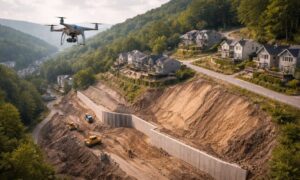
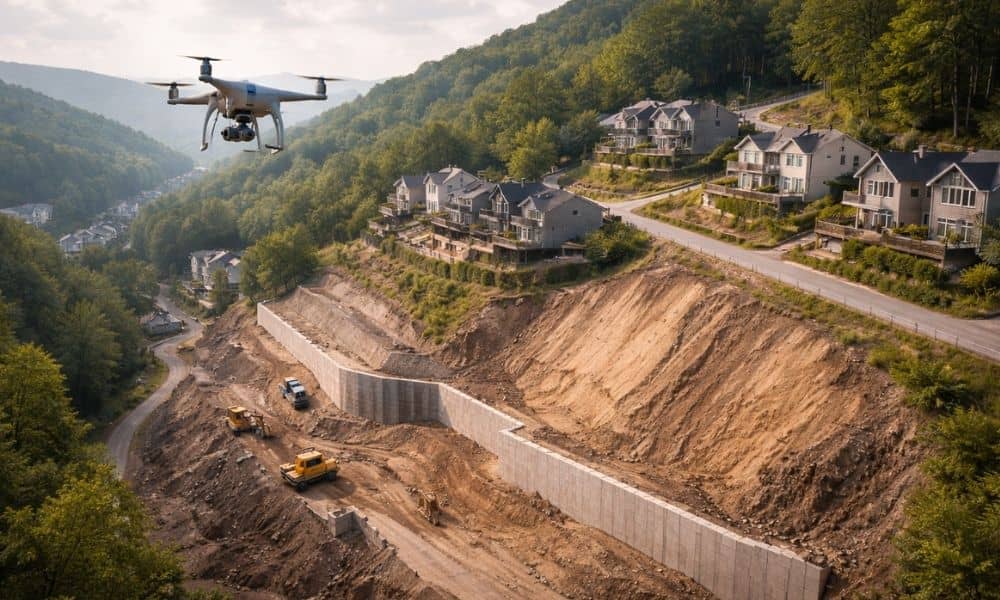
Western Pennsylvania is beautiful, but it is not flat. From the hills of Pittsburgh to the rolling valleys outside the city, steep slopes shape how we live and build. Homes sit on hillsides. Roads cut through embankments. Stormwater rushes downhill during heavy rain. Because of this terrain, slope stability is not just an engineering term — it is a real concern for property owners. Recently, industry news has highlighted how drone surveying now supports slope risk studies, not just basic mapping. That shift matters here. In Western Pennsylvania, slopes can move slowly over time before anyone notices. So, early detection can make the difference between a minor repair and a major failure.
That is exactly where drone surveying comes in.
Slopes in Western PA Do Not Stay the Same
At first glance, a hillside may look stable. Grass grows. Trees stand tall. Retaining walls seem solid. However, slopes change little by little.
For example, heavy rain can wash soil downhill. Freeze–thaw cycles in winter expand and contract the ground. Runoff can carve small channels that grow wider each season. Even new construction can disturb soil and shift drainage patterns.
Most slope failures do not happen overnight. Instead, they begin with small surface changes. Unfortunately, those small changes are easy to miss during a single site visit.
Therefore, property owners and developers need more than a one-time snapshot. They need a way to measure the land and track how it changes over time.
How Drone Surveying Sees What the Eye Misses
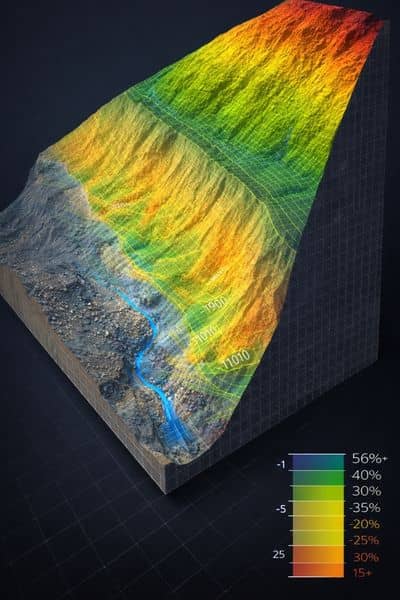
Drone surveying does much more than capture aerial photos. Modern drones collect high-density data that creates detailed terrain models. These models show the shape of the land in 3D, including subtle dips and rises that people may not notice from the ground.
For slope stability work, that level of detail makes a big difference.
First, drone surveying creates accurate Digital Terrain Models (DTMs). These models remove trees and surface clutter so engineers can analyze the true ground surface. As a result, they can measure slope angles, identify steep zones, and map drainage paths.
Next, surveyors can use that data to calculate slope percentages. Steeper slopes carry higher risk, especially when soil type and water flow come into play. With precise measurements, engineers can design better grading plans and drainage systems.
Most importantly, drone surveying allows repeat flights. A surveyor can fly the same slope every six months or after major storms. Then, they can compare the new terrain model with the previous one. Even small vertical shifts or erosion patterns become visible in the data.
That repeatable monitoring turns mapping into a proactive tool.
Why This Matters in Western Pennsylvania
Western Pennsylvania faces unique terrain challenges. Steep neighborhoods sit above narrow roads. Stormwater flows quickly toward rivers and streams. Some developments require significant cut-and-fill work to create buildable lots.
Because of that, slopes often support homes, driveways, and retaining walls. If the ground moves, those structures feel the impact.
For example, a developer planning a hillside subdivision needs accurate slope data before construction begins. If they rely only on rough grading plans, they risk unexpected erosion or settlement later. That is why many teams now use drone surveying for slope analysis. It gives them a clearer picture of how steep certain areas really are and how water will move across the property. With that information in hand, they can adjust the grading plan early instead of dealing with costly repairs later.
The same idea applies to commercial property owners. Slopes behind buildings or parking lots may look stable, yet small surface changes can develop over time. By using drone surveying to check those areas regularly, owners can spot patterns before cracks show up in pavement or foundations.
Municipalities also benefit. Roadway embankments and public trails often follow steep terrain. When local agencies schedule repeat drone flights, they can compare terrain models, track erosion, and plan maintenance before a small issue turns into a safety concern.
In each case, early insight protects both safety and budgets.
Moving from Reactive to Proactive
Traditionally, many property owners respond to slope problems after visible damage appears. They notice cracks, leaning walls, or sinking ground. Then, they call engineers to investigate.
However, that approach often costs more in the long run.
Drone surveying supports a proactive strategy instead. First, surveyors capture a baseline model of the slope. That model becomes a reference point. Then, they schedule follow-up flights over time. Over months and even years, those repeat flights begin to tell a story about how the slope is behaving. This ongoing review naturally turns into what professionals call drone-based slope monitoring — a simple way to keep an eye on changes before they become serious.
If the data shows measurable shifts in elevation or subtle surface movement, engineers can step in early. They may improve drainage, reinforce a retaining wall, or stabilize soil before serious damage occurs. As a result, small warning signs do not grow into expensive repairs.
This shift changes the conversation. Instead of asking, “Why did this fail?” property owners can ask, “How can we prevent failure?”
That mindset fits perfectly with Western Pennsylvania’s terrain.
What Clients Should Look For
Not all drone surveys deliver the same value. When slope stability matters, clients should look for a team that understands both land surveying and terrain analysis.
For example, ask whether drone surveying includes high-resolution terrain modeling. Also, confirm that a licensed land surveyor oversees the work. Accuracy matters, especially when slopes involve structures and public safety.
In addition, ask about repeat monitoring options. A single flight provides useful information, but scheduled flights over time create real insight. That ongoing data allows engineers to detect trends rather than react to surprises.
Finally, make sure the provider understands local terrain conditions. Western Pennsylvania’s mix of steep hills, layered soils, and heavy rainfall creates specific challenges. Experience in the region makes a difference.
The Future of Slope Stability Mapping
Across the industry, professionals now use drone surveying for more than simple mapping. They use it to build terrain datasets that support risk analysis and long-term planning. That trend continues to grow.
In Western Pennsylvania, where slopes shape nearly every neighborhood, that shift feels natural. Detailed terrain models, repeat monitoring, and clear elevation data give property owners stronger control over their land.
Of course, drone surveying does not replace engineers or geotechnical studies. Instead, it strengthens them. It provides better input data and clearer surface insight. As a result, engineers can design safer slopes and smarter drainage systems.
When hills define your region, understanding the ground becomes essential.
Drone surveying offers a practical, forward-looking way to track how slopes behave. For developers, municipalities, and homeowners across Western Pennsylvania, that may make all the difference.