Most people never think about land encroachment until it hits the news. But an aerial survey can expose problems that no one sees from the ground. That’s exactly what happened overseas this week when an Indian Deputy Chief Minister flew over a protected forest and discovered 76.74 acres of illegal land grabbing in a single sweep. The story went viral, and it should make homeowners pause for a moment. If an aerial survey can reveal that much hidden activity in a huge forest, imagine what it could uncover in a tight neighborhood.
This isn’t about India. It’s about the power of viewing land from above and how it protects people who own property—especially in a city built on hills, slopes, wooded ravines, and old retaining walls.
A Viral Story With a Lesson Hidden Inside
The original event spread quickly online. During a government inspection, officials used a drone-based aerial survey to scan an entire forest region. What they found was shocking: homes, farms, and structures sitting on land that was never supposed to be touched. The flight took minutes, but it revealed problems that had been ignored for years.
People weren’t talking about the forest alone. They were talking about how much could stay hidden when no one looks from the sky.
This is the part where Pittsburgh enters the conversation.
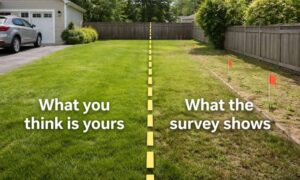
Here in Western Pennsylvania, we have dense tree cover, steep slopes, long driveways, and old neighborhoods where property lines shift over time. You might think everything looks normal from the street, but once you see your land from above, you notice things you didn’t expect: fences placed several feet off the line, a shed creeping into your neighbor’s yard, or stormwater that flows differently than you assumed.
The big question becomes: What would an aerial survey reveal about your property?
What an Aerial Survey Really Does

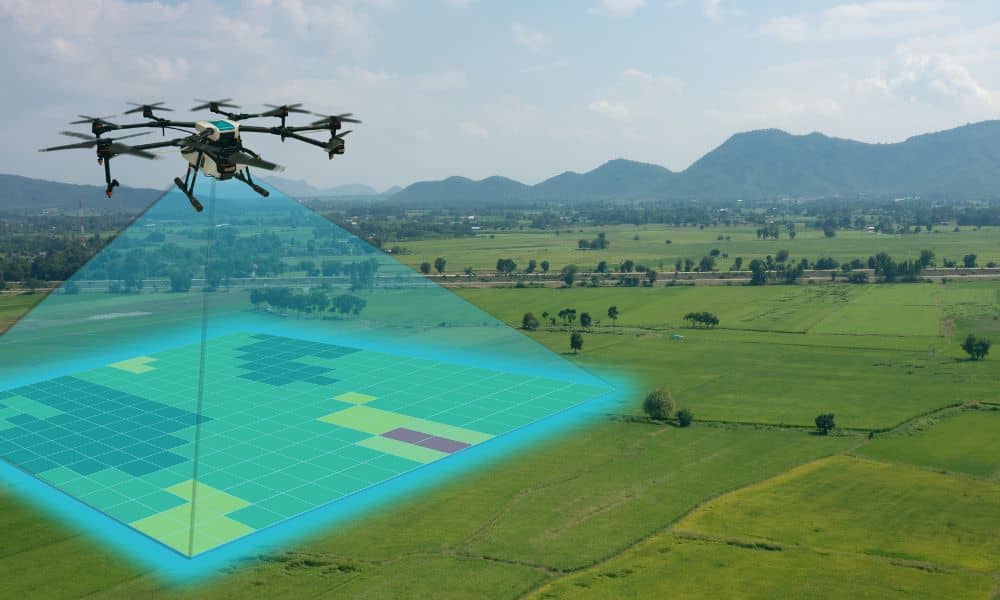
An aerial survey is exactly what it sounds like—surveying from above. Instead of guessing from the ground, a drone flies over the land and captures detailed photos, elevation data, and accurate measurements. Surveyors use this information to create maps and models that show the “truth” of a property.
Here’s why it matters:
- The drone sees over fences, bushes, and tree lines.
- It catches things that a ground crew might miss on a steep hillside.
- It gives a complete picture of the land, not just a few points.
A traditional survey still matters, because that’s where legal boundaries get confirmed. But once you combine the two—ground survey + aerial survey—you get clarity. And clarity saves money, time, and headaches.
Why This Matters for Homeowners
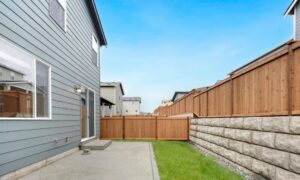
Pittsburgh terrain is… tricky. We love our hills and ravines, but they make property lines and construction projects harder. A neighbor’s fence might slide over time. A retaining wall from the 1950s might no longer sit where the original survey said it did. And dense trees can hide features that affect stormwater, soil movement, and future projects.
Here’s how this viral story ties directly to us:
1. Encroachments Happen Slowly and Quietly
The overseas story showed encroachments that seemed invisible for years. The same thing happens here, just on a smaller scale. A fence gets built without checking the line. A shed gets placed “close enough.” A driveway expands over a boundary. No one notices until someone decides to build or sell.
An aerial survey cuts through the guesswork and shows the facts.
2. Hillsides Hide Important Details
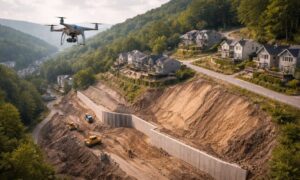
Anyone who lives in Mt. Washington, Brookline, Greenfield, or Fox Chapel knows how steep some lots can be. Ground crews do great work, but they can’t always climb every slope safely. A drone doesn’t care. It captures the entire terrain, including the parts you rarely see.
This matters when:
- Building a deck
- Adding a garage
- Planning a driveway
- Repairing a retaining wall
- Installing a fence
One wrong assumption about slope or boundary can change a whole project.
3. Permits Often Require Accurate Surveys
Many projects need stamped plans or verified measurements. If the city asks for a site plan or elevation details, contractors need accurate data—not a guess.
An aerial survey gives professionals the topography they need to design safely. When the terrain drops suddenly or a stormwater path shifts, the drone sees it clearly. That means fewer surprises once construction begins.
What This Viral Moment Should Teach Every Homeowner
The overseas discovery wasn’t amazing because it happened far away. It was amazing because it showed how much we miss when we only look from the ground. Even in calm, quiet neighborhoods, land changes. Trees grow. Retaining walls lean. Fences tilt. And property lines seem to “move” even when they don’t.
This is where aerial surveys become valuable for everyday people—not just big developers.
If you own a home, an aerial survey can answer questions like:
- “Is my fence actually on my property?”
- “Is my neighbor’s shed crossing the line?”
- “Is this slope safe enough to build on?”
- “Does stormwater flow where I think it does?”
- “Are trees, rocks, or walls affecting my boundary?”
Most homeowners only learn the truth when it’s too late—during a permit review, a home sale, or a dispute with a neighbor.
The goal is to spot issues early, not at the worst moment.
When Should You Consider Getting an Aerial Survey?
If you’re planning any of these projects, surveying from above can save trouble later:
- A new fence
- A deck or addition
- A garage
- A retaining wall
- A driveway
- Grading or drainage changes
- Buying or selling a home on a slope
Even if your lot looks simple, the aerial view often tells a different story. And once you see your land mapped clearly, decisions become easier.
Aerial Survey + Boundary Survey = Peace of Mind
A drone can show the landscape. A boundary surveyor can confirm the legal property lines. When you combine both, you get the complete picture—what the land looks like and where the line actually sits.
That means:
- Better planning
- Fewer disputes
- Smoother construction
- Stronger resale value
And most importantly, no surprises later.
Final Thoughts
The viral overseas story wasn’t really about a forest. It was about the power of seeing land honestly. When an aerial survey exposed 76 acres of hidden encroachment, it reminded the world that land doesn’t always tell the truth from the ground.
In Pittsburgh, the same technology helps regular homeowners protect their property, avoid costly mistakes, and build with confidence. You don’t need a huge forest to benefit from an aerial survey—you just need the desire to understand your land clearly.
If you want certainty about your property lines, slopes, or future projects, pairing an aerial survey with a boundary survey is the smartest way to start.