How To Find Your Property On FEMA’s Flood Insurance Rate Maps

What are FEMA flood maps?
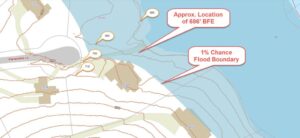
FEMA’s Flood Insurance Rate Maps (FIRMs) or just Flood Maps are provided after a flood risk assessment has been completed or updated for a community.  This study is known as a Flood Insurance Study.  The FIRM gives you the Base Flood Elevations (BFEs) and insurance risk zones in addition to floodplain boundaries.  The FIRM may also show a delineation of the regulatory floodway.

Once the “insurance risk zone”  (commonly referred to as the flood zone) is determined, actuarial rates, based on these risk zones, are then applied for newly constructed, substantially approved, and substantially damaged buildings.  FEMA uses these rates to determine the insurance rate you will pay for flood insurance

FEMA’s Digital Flood Maps

FEMA discontinued the production and distribution of paper flood maps in 2009 as part of its Digital Vision Initiative. This affected all the Flood Maps, boundary information, and study reports. However, clients can still view the products for free through their website or buy them in digital format.

To view these flood maps online, go to FEMA’s Map Service Center and key in your address (hi-lited area shown here) search for your home.  This will prompt you to then select the map that covers your area.  The Flood Maps are somewhat cumbersome to use online. It is best to go through the tutorial on the bottom right of the address search page for an easier and more effective use of the GIS map.

author avatar
Surveyor

More Posts

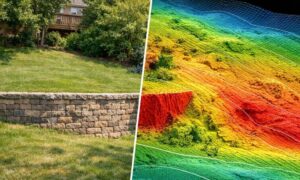
Lidar mapping view showing hidden slope and elevation changes behind a residential yard with a retaining wall
land surveying
Surveyor

How Lidar Mapping Helps You Spot Property Risks Early

Buying a home in Pittsburgh feels different from buying in a flat city. You’re not just choosing a house. You’re choosing the land under it, and in a place full of hills, that land can bring surprises. A yard might look clean and level during a showing. The retaining wall

Read More »
Buyer reviewing property documents and site plans during a delayed closing process highlighted by an ALTA Survey
alta survey
Surveyor

Why an ALTA Survey Can Delay Your Closing

An ALTA survey often enters the process when a deal already feels close to the finish line. Financing is lined up, timelines are set, and everyone expects a smooth closing. Then the survey comes in, and suddenly things pause. In Philadelphia, this happens more often than most buyers expect. The

Read More »

Why More Homeowners Need Elevation Certificates Now

If you own property in Pittsburgh, PA, you may suddenly hear a new term from your insurance agent or lender: flood risk elevation certificate. Even if your home has never been considered at risk for flooding, recent updates to flood maps are changing that. Across the country, the Federal Emergency

Read More »
A residential backyard showing a marked boundary line to illustrate how a property line survey helps determine actual property limits
boundary surveying
Surveyor

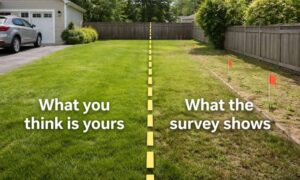
Property Line Survey: Is That Land Really Yours?

Have you ever used a strip of land beside your yard and assumed it was yours? Maybe you park there, mow it, or even plan to build something on it. Then one day, you hear a new term—paper street—and suddenly things feel unclear. This situation happens more often in Pittsburgh

Read More »
LiDAR mapping showing elevation differences across a dense residential property with subtle slope variations visible
land surveying
Surveyor

How LiDAR Mapping Finds Elevation Issues Before Design

If you own property, it is easy to assume your lot is flat enough to build on. At first glance, most properties look level. However, small changes in elevation often hide in plain sight. These changes may seem minor, yet they can affect your entire project. That is where LiDAR

Read More »
Hillside homes built on steep terrain where a topographic survey helps evaluate slope stability before development
land surveying
Surveyor

Topographic Survey: Check Hillside Landslide Risk

Pittsburgh sits on steep hills and narrow valleys. Many homes perch above rivers or along hillside streets. The views can look amazing. However, building on sloped land takes careful planning. Soil can move. Slopes can shift. In some areas, landslides can happen after heavy rain or ground changes. Because of

Read More »